「数百億のエージェントがやってくる」 — ヤット・シウが語るWeb4・エージェント型ウェブ、そして「我々の知るソフトウェアは死んだ」|T4IS 2026
Tech for Impact Summit 2026に登壇したAnimoca Brands共同創業者ヤット・シウ。Web3が基盤、Web4はエージェント型ウェブ。数百億のAIエージェントがステーブルコインで取引し、メディアトラフィックは80%減、日本のオーケストレーション文化こそがエージェントAI時代の最大の優位性 — その理由を解説。
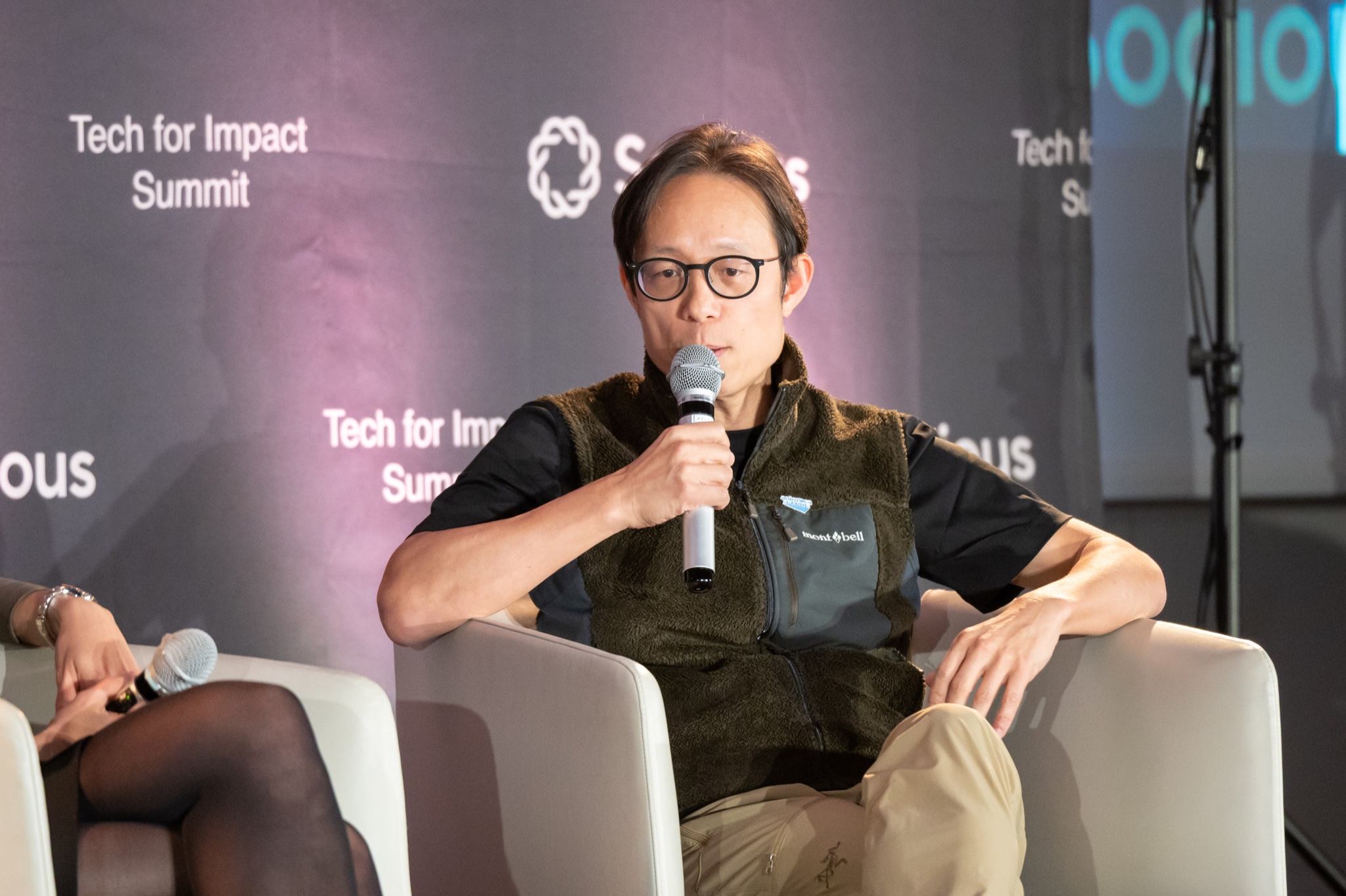
“We’re going to have tens of billions of agents in the world roaming around doing stuff.”
That was the line Yat Siu used to anchor the room at Tech for Impact Summit 2026. The Animoca Brands co-founder was on the Main Stage in Tokyo on April 26, in conversation with Una Softić, for a Strategy Dialogue titled Web4: The Autonomous Agentic Web. The framing was deliberate — Siu was not there to defend Web3 against the AI moment. He was there to argue that the AI moment is what Web3 was built for.
“For us, Web3 was basically digital property rights — the web of ownership,” he told the audience. “In Japan, though, Web3 got narrowed down and became synonymous with crypto. So it’s completely shadowed everything else that it was supposed to.”
The reframe matters because of what comes next. Web4, in Siu’s telling, is not a marketing rebrand of Web3. It is the layer that Web3’s infrastructure makes possible — an internet whose primary economic participants are not humans but autonomous agents acting on humans’ behalf. And it is arriving faster than the audience expected.
The Population Math Nobody Has Done
Siu opened with a numbers exercise. When he asks audiences how many AI agents they think they will run, the typical answer is three to five.
“I have 200, and I probably have a thousand by the end of the year,” he said. “But simply put, it’s going to be typically more than the number of people that are online. That means we’re going to have tens of billions of agents in the world.”
That projection — agents outnumbering humans on the internet within a few years — has implications most companies have not begun to price in. The first one Siu named was traffic. If most discovery is happening through agent summaries rather than human browsing, the open web’s traffic economics collapse.
“Today, already, we no longer are browsing the web like we used to. If you’re using Google, you’re doing a search, you’re basically getting the summary. And you don’t know what to click through. So if you are a traditional media website, your traffic is down 80%. That’s the average number right now. So how do you make money from that? It completely reshapes it.”
The 80% figure landed hard. It is the kind of number that, if accepted as baseline, dismantles the assumptions behind almost every digital media business model — and most online advertising forecasts — that still pencil out on human attention.

Why Web3 Is the Foundation Web4 Sits On
The intellectual heart of the dialogue was Siu’s argument that the agentic web only works because the property-rights infrastructure of Web3 already exists.
He reached for an analogy from antiquity. “Writing was invented for the ledger,” he said. “The ancient Sumerians invented writing five thousand years ago because you had to prove who’s house was it. If you couldn’t prove ownership, you couldn’t organize society. Society could never become larger than 100 or 200 people — Dunbar’s number was basically 150. When you started building actual cities and villages, you needed a way to prove that ownership.”
“And what is blockchain? It’s basically a machine ledger. It’s a distributed machine ledger that we can use to prove in a decentralized manner, but actually is the ledger for machines.”
That framing — blockchain not as a libertarian protest movement but as the equivalent of cuneiform for autonomous software — has been quietly gaining traction inside the largest stablecoin issuers and the largest asset managers. The proof point Siu cited was the throughput delta over a decade. “Nine years ago in CryptoKitties, a few million dollars of sales melted the blockchain. It could do no transactions. And today, because of stablecoins, because of Solana, Ethereum, scaling solutions, trillions of dollars with BlackRock, Fidelity, Standard Chartered — we can now basically do everything that banks can do on chain.”
The mechanism that makes the agentic web real is simple. AI agents cannot open bank accounts. They cannot pass KYC. They can, however, hold and transact stablecoins on a public ledger that proves ownership cryptographically. The same point was made earlier in the day by former Minister Masaaki Taira in his keynote on Japan’s AI On-Chain Finance Initiative, and again by Sota Watanabe of Startale on the Japan Strikes Back Web3 panel. Three independent speakers — a politician, an infrastructure founder, and an investor — converged on the same architectural claim within ninety minutes. That is the kind of repetition that signals a thesis hardening into consensus.
”Software as We Know It Is Dead”
The line that produced the longest silence in the room was Siu’s prediction for the enterprise software market.
“Software as we know it is dead,” he said, “because we don’t need basically one company that’s running software for an entire nation or entire city or whatever. Instead, we’re all going to have customized pieces of software.”
The market structure implication is severe. The dominant SaaS playbook of the last two decades — one company captures a workflow, sells the same product to thousands of customers, compounds via switching costs — does not survive a world in which any small business can spin up a custom application with an agent. Siu’s example was deliberately small: “Everyone of those guys who are being let go, they’re going to be able to sort of help five restaurants build a custom software for their customer applications.” Not Salesforce for restaurants. Custom code per restaurant, written by an agent, maintained by one person, priced like a freelancer.
He extended the same logic to professions. “Programming, in my view, is going to go the way of Instagram with photos. I grew up in the time in the 80s and 90s where being a photographer was a job for only a small percentage of people. And today, because of AI agents, everyone is a programmer.” The limitation, he said, is no longer technical — it is psychological. Most people still answer “no, I don’t program” when offered the capability, the same way most people in the 1990s would not have called themselves photographers.
The Authenticity Premium
If every agent can produce indistinguishable output, what does scarce look like? Siu’s answer: provenance.
“What we pay for isn’t the fact that it is looking good. What we pay for is that it’s coming from you. So the premium for authenticity, which has always been the premium for trust in relationships — that’s the role of blockchain, to verify that this is basically coming from outside.”
The mechanisms he named were specific: digital identity, soulbound NFTs, agent-to-agent introductions backed by verifiable credentials. The use case he illustrated was even more specific: when someone visits his home city of Hong Kong, he no longer sends them a list of his favorite restaurants. He introduces them to his agent. “The agent can basically just say, here’s a favorite restaurant, but it’s constantly updated. And what’s also interesting is feedback comes back. So even though I’m not communicating, I’m actually building a kind of parasocial relationship with everyone else who’s engaging through the agent in a more direct way.”
It is a small example with a large implication. The unit of relationship in Web4 is not the message thread between two humans. It is the connection between two agents, each carrying a verified link back to the human whose preferences and reputation they represent. That is what soulbound credentials and on-chain identity are for. Without them, the agentic economy has no way to distinguish a legitimate agent from a hostile one.
Japan’s Orchestration Moat
Siu spent the closing third of the dialogue on Japan’s specific position. His argument is contrarian relative to the consensus that Japan has fallen behind in AI.
“The lead in agentic AI is not about the LLMs,” he said. “The LLMs — it’s basically about orchestration layers, about how you harness it together. And frankly, that race only started probably December, maybe January. So it’s a very, very early, early, early stage.”
The Japanese cultural capacity he flagged was orchestration itself. Running 100 to 300 agents, he argued, is closer to running a factory than to managing software. “Japan actually has some pretty good management in terms of orchestration,” he said. “In a way, it’s almost like running a factory when you’re actually managing agents.” When Softić extended the point to Japanese manufacturing culture, Siu took it further. “Kaizen culture kind of makes an assumption that humans are like robots. But actually, agents are actually robots. So in this sense, I think they’re more suited for that kind of mindset than human management.”
The second asset he named was the one Animoca itself is built on — Japan’s pop culture and intellectual property. “Gaming is really, if you think about it, not technology. It’s storytelling and harnessing other kinds of technology — be it Unreal or Unity or basically the platforms — but creating these incredible stories that bind communities together.” In Siu’s framing, anime, manga, gaming, and music are not consumer categories. They are the substrate on which agentic experiences will be built, and Japan is the country that has been investing in that substrate for fifty years.
What to Do on Monday Morning
Softić’s closing question was practical: what should the audience actually do.
Siu’s answer was two-part. First, use agents. “The only way you’ll know is if you actually use them. Most people, using agents is hard — they have to use Open Claude or a VPS or they don’t know what LLM to use. But just sign up with an email and start. Whether it’s Claude, whether it’s some other system, start using agentic AI.”
Second — and this was the unexpected part — give them names. “You really only get to the feeling of using agentic AI if you give them a name. You don’t call them calendar or robot. You give them an identity. You give them a personality. And that allows you to open up that next phase of thinking, because then you have essentially a coworker. Otherwise you only see it as a tool. It’s like the internet in the early days — when you talked to people about the internet, they saw it as a tool for e-commerce and for transactions. And now it became just lifestyle. That’s what agents will do as well.”
The bridge from tool to lifestyle is the bridge between Web3 and Web4. Web3 gave software the ability to own and transact. Web4, in Siu’s reading, is what happens when that capability gets handed to entities that have personalities, names, and goals — and when there are tens of billions of them.
The themes Siu raised — agent-to-agent payments, the collapse of one-size-fits-all software, the authenticity premium, Japan’s orchestration moat — are the threads that next year’s Tech for Impact Summit will pick up. If you lead a company, a fund, or an institution that needs to be in those conversations, the membership program for T4IS 2027 is open.