Reading Japan's AI and Web3 Policy Six Months Early — Masaaki Taira at T4IS 2026
On the Tech for Impact Summit 2026 Main Stage, former Minister for Digital Affairs Masaaki Taira explained how to read Japan's AI, Web3, and cybersecurity strategy through LDP project teams — and previewed Japan's Project Glasswing, AI On-Chain Finance, and the latest AI White Paper.
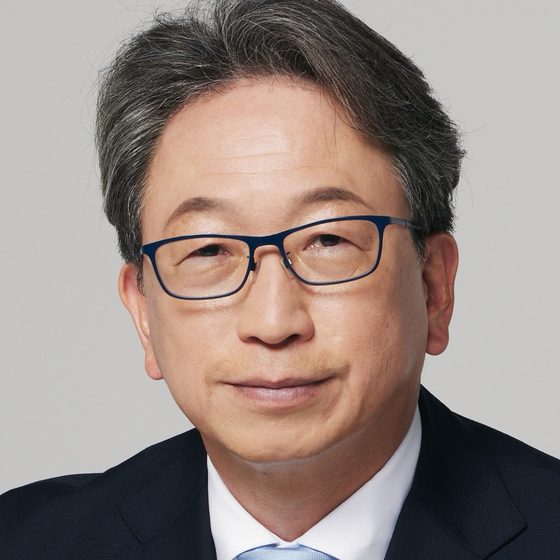
“When I create a Project Team in the LDP, it almost always becomes national policy.”
That was the line that made the room sit forward. Masaaki Taira — Member of Japan’s House of Representatives, former Minister for Digital Affairs, the country’s first Minister for Cyber Security, and currently Head of the LDP’s National Cybersecurity Strategy Headquarters — was on the Tech for Impact Summit 2026 Main Stage in Tokyo on April 26. Over fifteen minutes, he walked the audience through something most foreign investors and entrepreneurs in the room had never seen articulated this directly: a manual for reading Japan’s technology strategy six months before the government formally announces it.
The Reading Manual
Taira’s central observation was structural. Japan’s official growth strategy is published by the Cabinet Office in late May or June each year. By that point, the substance has effectively been settled. The real action, he explained, takes place one to two months earlier inside Liberal Democratic Party project teams that draft white papers and submit them through the policy process.
If you want to know where Japan is going, watch the project teams.
The track record he cited spans the major technology debates of the past four years: a Web3 and Blockchain project team in 2022, Generative AI in 2023, Cybersecurity and Fusion Energy in 2024, and most recently the Next-Generation AI and On-Chain Finance Task Force, where he serves as Deputy Chair under Seiji Kihara. Each, in his telling, traveled the same path from white paper to national policy.
For an audience that included international investors, founders, and policy professionals, the implication was straightforward. The signals are visible if you know where to look — and they are visible months before they reach the wires.
Project Glasswing — A National AI Cybersecurity Coalition
The most concrete preview Taira shared was Japan’s Project Glasswing, a national AI cybersecurity coalition that had launched the Friday before the summit under the leadership of Finance Minister Satsuki Katayama.
The coalition’s initial perimeter sits in financial services. The participating institutions, as Taira described them, include the Financial Services Agency, the Bank of Japan, the Tokyo Stock Exchange, and Japan’s three megabanks, alongside a set of frontier AI providers — Anthropic, Google, OpenAI, and Microsoft — and Japanese cybersecurity firms.
Taira positioned the initiative as the Japanese counterpart to a similar effort launched in the United States. The expanded version, he said, will reach beyond finance into critical infrastructure — electricity, gas, telecommunications — under the leadership of Japan’s National Cybersecurity Office, established in 2025 during his tenure, with input from Japan’s AI Safety Institute, established in 2024 by then-Minister for Economic Security Sanae Takaichi.
“Japan is the most politically stable G7 country right now,” he said. “Capital and talent are flowing here.”
AI On-Chain Finance — A Davos Conversation, Now Policy
The second preview connected directly to a session that ran earlier in the same day at the summit. In the morning, Animoca Brands co-founder Yat Siu had argued from the same stage that AI agents — increasingly autonomous software actors operating on behalf of humans and organizations — cannot easily open bank accounts. The implication, in Siu’s telling: agentic AI economies will need stablecoins and on-chain settlement rails.
When Taira reached the AI On-Chain Finance portion of his talk, the line of reasoning landed with unusual clarity. He traced his own conversion to a series of conversations at the World Economic Forum in Davos in early 2025. AI agents, he had come to believe, need a financial layer that does not depend on legacy account-opening processes. Stablecoins, in his framing, are that layer.
The Next-Generation AI and On-Chain Finance Task Force was assembled in response. Recommendations, he said, would be published shortly after Japan’s Golden Week.
For attendees who had watched both sessions, the moment underscored something specific about T4IS itself: the global frontier of agentic AI and the front line of Japanese policy-making were finishing one another’s sentences across the same stage, in the same afternoon.
The Latest AI White Paper
Taira’s third preview was the AI White Paper that his team had published days before the summit. He summarized it across five themes:
- Agentic AI, with regulatory and procurement implications across government services.
- AI and Robotics, anchored by a roughly one-trillion-yen public-private push on physical-AI foundation models.
- Vertical AI, built on Japan’s deep industrial datasets — much of it not available on the open internet — that he believes give Japanese firms a structural advantage in domain-specific AI.
- AI for Education, addressing how Japan’s classrooms, universities, and lifelong learning systems integrate AI tooling.
- AI for Defense, treated as a distinct policy track.
His framing was less about any single program and more about the shape of the bet. Japan, he argued, has been making the same strategic wager for three years: become the world’s most AI-friendly country.
Why It Matters for the Tech for Impact Summit Audience
The Tech for Impact Summit was designed as a meeting point for leaders who want to shape — not merely observe — the deployment of high-impact technology. Taira’s session crystallized the policy half of that proposition.
For founders, the signal was practical: the project teams Taira chairs or supports are publishing in the open, and reading them is one of the more efficient ways to position a company against the direction Japanese regulation is moving. For investors, the signal was about timing. For policy professionals already familiar with Japan’s process, the candor was the news.
His closing returned to the room: Japan’s stability, its capital base, and the talent flowing into Tokyo are creating an unusually open window for serious technology builders. The chapter ahead, he suggested, is being written now, in white papers most readers have not yet picked up.
About the Tech for Impact Summit
The Tech for Impact Summit is an invitation-only executive gathering in Tokyo, convening leaders across business, policy, and culture to deploy high-impact technology against humanity’s most urgent challenges. Past speakers have included Audrey Tang and Takuya Hirai, Japan’s first Minister for Digital Affairs.
The full recording of Masaaki Taira’s session is available on the Tech for Impact Summit YouTube channel. Search “Tech for Impact Summit” to watch the complete talk.