「AIには銀行口座が持てない、だからステーブルコイン」— 元デジタル大臣・平将明氏が語る日本のAI×オンチェーン金融戦略(T4IS 2026)
元デジタル大臣・平将明氏がTech for Impact Summit 2026で語った日本の政策カレンダー、新設のAI×オンチェーン金融プロジェクトチーム、日本版プロジェクト・グラスウィング、エージェント型AIがステーブルコインに収斂する理由。
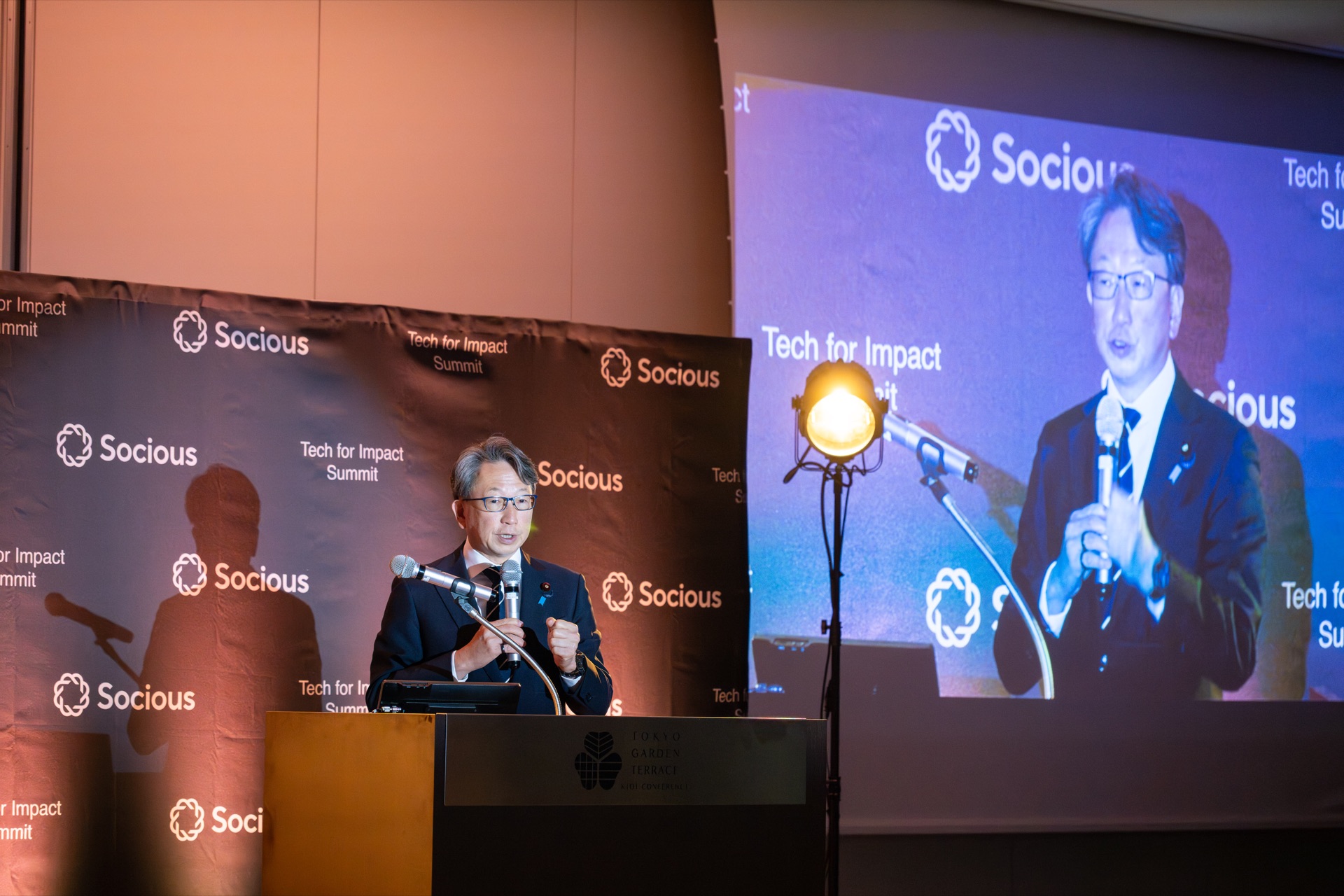
Halfway through his address at Tech for Impact Summit 2026, Masaaki Taira — Member of the House of Representatives, former Minister for Digital Affairs, and architect of more LDP technology Project Teams than any other sitting legislator — set the room a brief vocabulary problem.
“AI can’t have a bank account,” he said. “So it’s stablecoins. Possibly crypto, too.”
Then, with a half-smile at the English-speaking half of the audience: “Fu ni ochita. I don’t know how you say it in English — but it clicked.”
That click, delivered on the Main Stage in Tokyo on April 26, is the most consequential sentence a Japanese legislator has said about AI and on-chain finance in 2026. Below the surface of an unassuming policy briefing, Taira laid out a thesis — and a delivery mechanism — that will shape where global capital and talent in AI, Web3, and cybersecurity land in Japan over the next eighteen months.
A Briefing for People Who Don’t Read Government Strategy Documents
Taira opened with a line about agriculture.
“It’s a bit like agriculture, in a way. Policy has a one-year calendar.”
The calendar, in his telling, goes like this. February and March are when ideas get seeded inside the ruling LDP’s Project Teams and working groups. By April, ministries and divisions have shaped them into proposals. The LDP’s growth strategy is finalized around the end of May. Two or three weeks after that, the Japanese government publishes those same priorities as the official Growth Strategy and Honebuto — the “Big-Bone Policy” — that anchors fiscal and regulatory decisions for the rest of the year.
The implication for investors and founders in the room was unsubtle.
“If you only start reading once the government strategy is out, no matter how hard you read it, you’ll be in the same boat as everyone else,” Taira said. “Right now — at this very moment — the proposals coming out of the various LDP committees are what you should be paying attention to.”
This is, in effect, a public service announcement from inside the policy machine. The white papers being drafted in April are not aspirational — they are roughly six weeks away from being national policy.
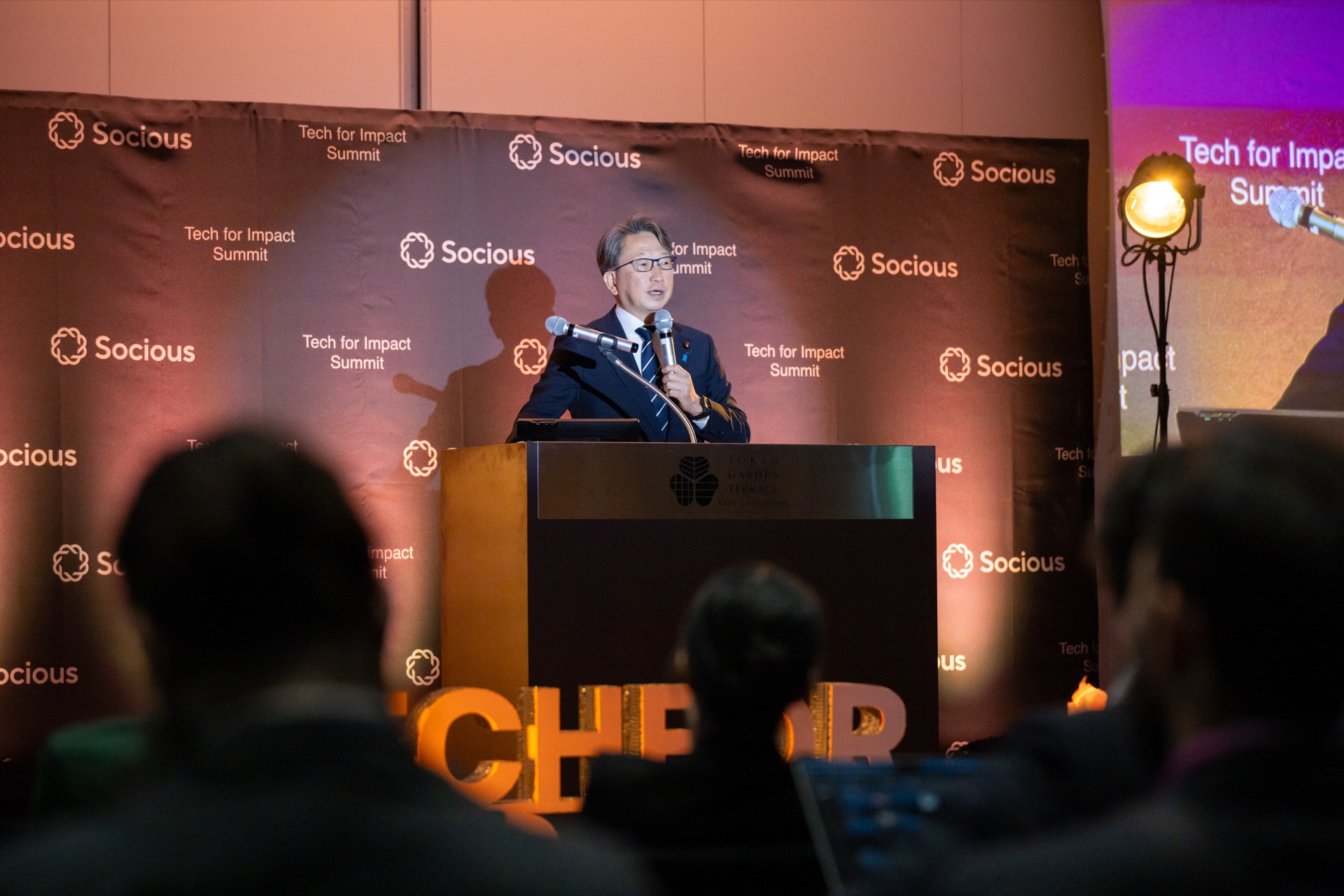
“When I Create a Project Team, It Almost Always Becomes National Policy”
To explain why he is worth listening to on that calendar, Taira walked the audience through his own track record.
- 2022 — Web3 / Blockchain PT. Output became the foundation of Japan’s stablecoin regulation and the first wave of crypto tax reform.
- 2023 — AI PT. Multiple white papers; outputs fed into Japan’s response to generative AI.
- 2024 — Cybersecurity and Fusion Energy PTs. Recommendations became core to Japan’s active cyber defense legislation and to the fusion R&D programs supporting Kyoto Fusioneering and peers.
- 2025 — In cabinet as Minister for Digital Affairs and the first Minister for Cyber Security. No PT that year.
- 2026 — AI On-Chain Finance Initiative PT. Just stood up. Acting chair: Taira. Chair: Seiji Kihara (formerly Ministry of Finance). Secretary-General: Hideki Murai (also formerly Ministry of Finance).
“When I create a Project Team, it almost always becomes national policy,” he said. It was not a boast. It was a forecast.
The 2026 PT is the one to watch. The name is deliberate — when the ruling party of Japan launches a body with the words “On-Chain” in its title, the symbolism for global digital-asset markets is large.
Japan’s Version of Project Glasswing
Before the on-chain finance pitch, Taira opened with cybersecurity — and a specific incident he is using as the wedge.
The Anthropic threat report — Anthropic’s recently published documentation of state-aligned actors weaponizing AI for cyber operations — has set off a parallel regulatory response in Washington. US Treasury Secretary Scott Bessent has convened tech companies and financial institutions in what has been reported as Project Glasswing: a Treasury-led standing forum to triage AI-enabled cyber risk to the US financial system.
Taira’s response, ten days old at the time of the talk, is to import the structure.
A Japanese version of Project Glasswing has been stood up under the Financial Services Agency, led by Finance Minister Satsuki Katayama. The FSA convened the Bank of Japan, the Tokyo Stock Exchange, and Japan’s three megabanks the week before the summit. The press conference announcing the program followed.
But Taira is already pushing past finance. The expanded version — with the National Cybersecurity Office (NCO, established under his tenure as the first Cyber Security Minister) at the head, the AI Safety Institute (AISI, Asia’s first, established two years ago under then-minister and now Prime Minister Sanae Takaichi) alongside, plus METI for power and grid, MLIT for transport — covers all critical infrastructure. The foreign frontier-model providers Taira named as participating partners: Anthropic, OpenAI, Google, and “possibly Microsoft.”
“As a country, we’ll start with vulnerability assessments, prioritize, and patch them in order. That’s how we want to proceed.”
This is the most concrete public statement to date of how Japan plans to operationalize cooperation between its cyber agencies, the FSA, and the four largest US frontier-model labs. For anyone evaluating Tokyo against Singapore, Seoul, and London as a base for AI-finance work, the existence of Project Glasswing JP is now part of the comparison.
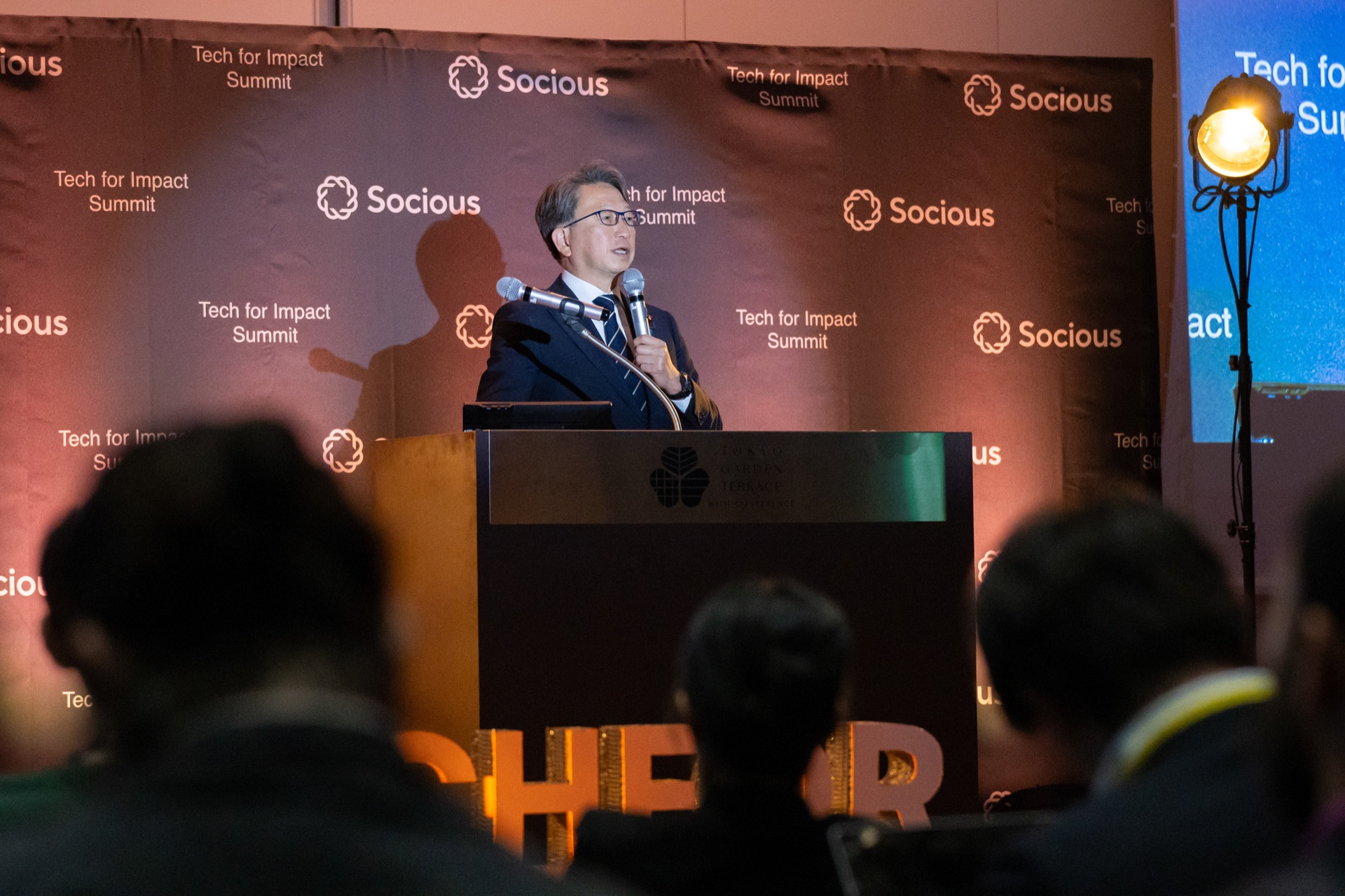
Why AI and Blockchain “Snapped Together” at Davos
The on-chain finance thesis, Taira said, crystallized for him at Davos in early 2025.
“Until then, blockchain policy and AI policy were running in parallel, separately. A year ago, those two snapped together for me. And the area where the most outcome — the most value — gets created, I’m convinced, is finance.”
The logic, as he laid it out, runs through agency. As AI moves into the era of autonomous agents — a transition Sota Watanabe had argued the day before on the same stage in our Web4 panel recap — agents will need to transact. They will need to settle. They cannot, under existing law in any major economy, hold a bank account.
The fallback, in Taira’s framing, is not optional. It is stablecoins. It is, possibly, crypto. It is, structurally, on-chain.
This is why the AI On-Chain Finance Initiative Project Team matters. By the end of May, after Golden Week, the PT will publish its recommendations — what new legislation Japan needs, what can be done with regulatory adjustments inside existing statutes, and where supervisory guidance from the FSA can move the system without new law at all.
Founders and investors building agentic-AI products that need to settle in yen or on yen-denominated stablecoins should be reading the recommendations the week they drop. They will be in the LDP growth strategy by end of May. They will be in the government’s Honebuto by mid-June.
The AI White Paper and the “Most AI-Friendly Country” Vision
Taira closed his time with the AI White Paper — released the week before the summit and, in his words, “still in draft, but I’m confident it will become national policy almost as written.”
The headline items:
- Agentic AI policy. The first white paper handled GPU capacity and Japanese/English hallucination problems. The new one is built for autonomous AI agents.
- AI × Robotics. Roughly one trillion yen of public-private investment to build a Japanese physical-AI foundation model — leveraging the data Japanese industrial companies hold that has never been published on the internet.
- Vertical AI. Domain-specific, high-expertise AI as a national priority. The strategic case: that same private industrial data is a moat that horizontal models built on the open web cannot replicate.
- AI for Education, AI for Defense, and adjacent domains covered comprehensively.
The frame Taira returned to in closing has been his thesis for three years: that Japan should be the world’s most AI-friendly country. A jurisdiction where AI can learn easily and be implemented easily. A regulatory regime that lets the technology actually be deployed.
“AI-related investment and talent are already gathering in Japan. The most politically stable G7 country right now is ours, so please bring your investment and your talent to Japan.”
What This Means for T4IS 2027
Taira’s address sat at a fault line that the next Tech for Impact Summit will sit directly on top of. The convergence of AI and on-chain finance is no longer a thesis paper from a think tank — it is, in Japan, the subject of an active LDP Project Team that will hand its recommendations to a Finance Ministry-led implementation track inside six weeks.
The reason T4IS 2027 exists, on May 18–19 in Tokyo, is to be the room where the global builders, investors, and policy leaders that will operate inside that new perimeter actually meet. The conversation between regulators like Taira, the cyber teams responding to the next iteration of the Anthropic threat report, the founders shipping AI-agent products that will need to settle on-chain, and the institutional capital that will fund all of it — that conversation has a venue.
If you are operating somewhere on that map and want to be in the room as 2027 takes shape, the T4IS 2027 membership tiers are how we structure the gathering. Senior executives interested in joining can reach us via the application page on this site, or search Tech for Impact Summit to find us.
Stage is being built. The policy calendar is already moving.
Masaaki Taira is a Member of the House of Representatives, former Minister for Digital Affairs, and the first Minister for Cyber Security of Japan. He chairs the LDP’s National Cybersecurity Strategy HQ, the AI & Web3 Subcommittee, and serves as Acting Chair of the Next-Generation AI & On-Chain Finance Task Force. See Taira’s speaker page and his pre-summit briefing on AI, Blockchain, and Japan’s Strategy for the longer arc.