Kカルチャーはなぜ世界を制したか — 韓国の文化的飛躍を支える技術|ジェジュン・ソン|T4IS 2026
Tech for Impact Summit 2026 メインステージで、Crit Ventures創業者ジェジュン・ソンが、Kポップ・Kドラマ・Kビューティー・ウェブトゥーンを世界的輸出産業へと変えたプラットフォームとデータ・ファネルを解説。
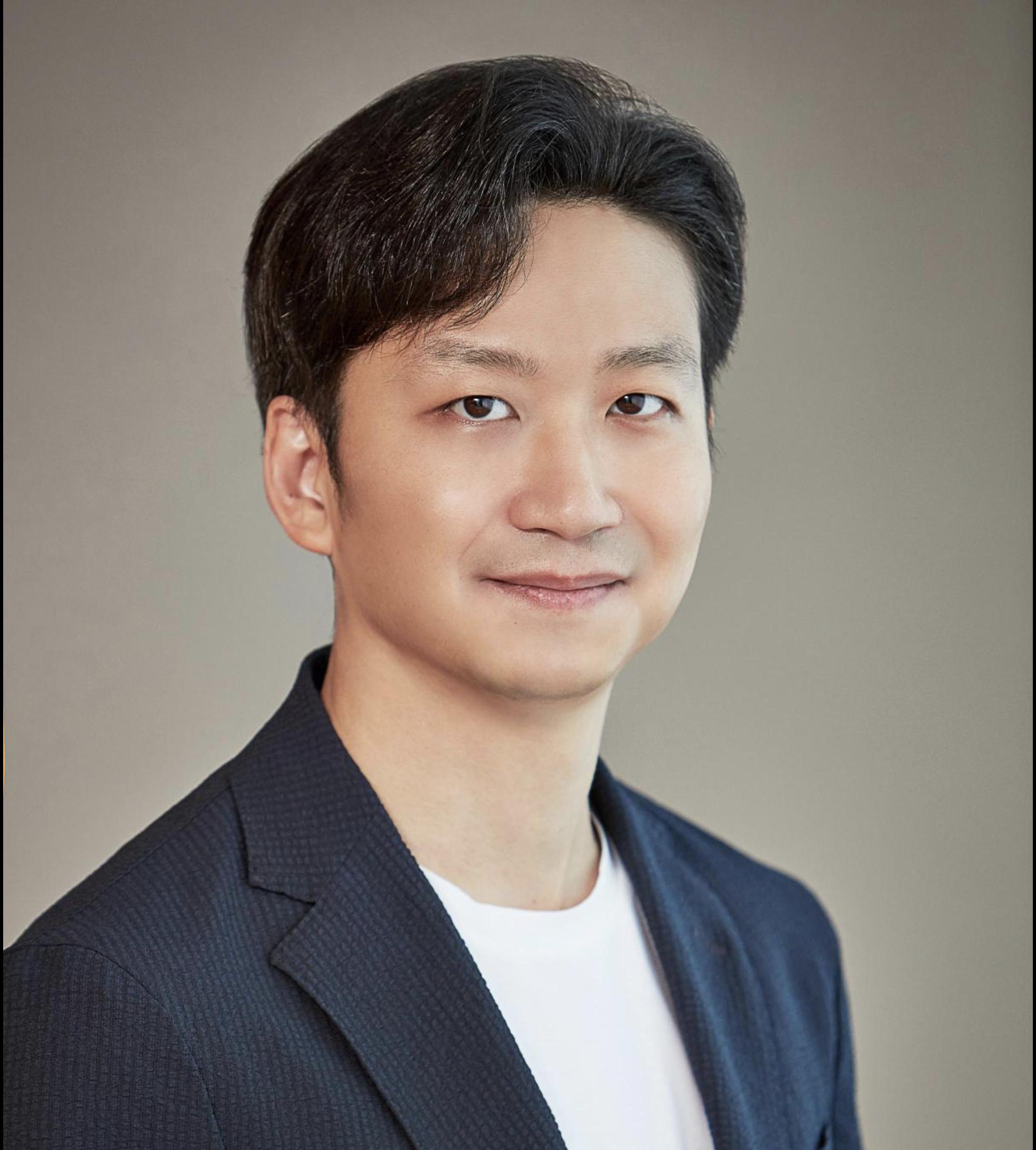
“The K-wave didn’t happen by itself. It was built on technology.”
That was the opening claim Jaejoon Song made on the Tech for Impact Summit 2026 Main Stage in Tokyo on April 26. Over the next twenty minutes, the founder and CEO of Crit Ventures — and Global CIO of Com2uS Holdings — walked through the platforms, data funnels, and production systems that, in his telling, turned a country of 51 million people into the world’s second-largest exporter of on-screen content.
Song would know. He co-founded Gameville in Seoul in 2000, building among the first wave of mobile games to ship on black-and-white feature phones. The studio was acquired by Com2uS in 2013, where he serves as Global Chief Investment Officer of a portfolio that includes Summoners War — a title that has earned more than three billion dollars across two hundred countries. In 2020 he founded Crit Ventures, a venture firm with offices in Seoul, Los Angeles, and Palo Alto, deploying capital across gaming, K-Culture, AI, and biotech.
The Thesis
The K-wave is often described as a cultural miracle. Song offered a different framing: it is a system, and the system is engineered.
Mobile distribution. AI recommendation. Streaming platforms. Webtoon infrastructure. Talent pipelines that operate at industrial scale. None of it is glamorous when you are watching Squid Game or listening to Rosé. But it sits underneath every export, and Song argued that anyone hoping to send their own culture into the world needs to understand the machinery.
He organized his case in three parts: scale, comparison, and capital.
Part One — The Scale
Song shared figures spanning eight numbers across five categories. K-Drama: Korean content drives roughly eight percent of all Netflix viewing globally, and Korea accounts for seventeen percent of the non-United States hits in the platform’s global Top 500 — ahead of the United Kingdom and Japan. K-Pop: Korean music has become the fourth-largest music export in the world, and Spotify’s 2024 Wrapped recorded K-Pop as the most-streamed genre globally for the first time. K-Webtoons: a $7.8 billion global market in a format Korea invented in 2003. The number-one digital comics application in Japan — the country that gave the world manga — is Piccoma, owned by Korea’s Kakao.
The claims continued into K-Beauty (Korea now ranks second in cosmetics exports globally, behind only France), K-Food (Korean food exports surpassed $13 billion last year, with Michelin-starred restaurants nearly doubling since 2015), and K-Medical (foreign dermatology patients traveling to Korea grew from roughly 60,000 in 2009 to more than 700,000 in 2024 — with Japan as the leading source country).
Each datapoint was offered as a snapshot of a structural shift, not as a marketing flourish.
Part Two — Two Paths to Global IP
The most analytically interesting part of the talk was Song’s comparison of the Japanese and Korean approaches to producing global intellectual property.
The Japanese pipeline, as he described it, is studio-led and craft-first. A manga artist works with an editor on a weekly serial. If the serial earns its readership, it becomes an anime, then a game, then merchandise. The work is deeply curated; decades of compounding craft sit beneath each stage.
The Korean pipeline, by contrast, is platform-native and data-driven. A web novel goes up on Munpia or Kakao Page, written by an amateur. If readers pay for chapters, the platform converts the novel into a webtoon. If the webtoon performs, it becomes a Netflix drama. From there: games, anime, merchandise. Each step de-risks the next, because the data filters every transition.
Song was emphatic that neither approach is superior. “Both produce masterpieces,” he said. “Japan starts with craft and scales. Korea starts at scale and craft emerges from the data. They are made for different eras.”
Solo Leveling was his case study. The story began in 2016 as a web novel by an amateur writer using the pen name Chugong, posted on Kakao Page. By 2018 it had become a webtoon viewed billions of times worldwide. In 2024 and 2025 it became a Netflix anime, with the animation produced by A-1 Pictures in Japan, alongside a mobile game published by Netmarble. Japanese and Korean content industries are now adapting one another’s intellectual property in both directions.
K-Pop as a Production System
K-Pop itself, Song argued, is no longer best understood as a musical genre. It is a five-stage production system: scout (agencies receive thousands of applicants annually), train (artists train for three to seven years on contract), debut (concept, visual, and major release coordinated to seed fandom before the first song), direct-to-fan distribution, and localization across markets.
What Korea is now exporting, he suggested, is the system itself. NiziU is composed of all-Japanese members under JYP Entertainment in partnership with Sony Music Japan, and has reached number one on Japanese charts. &TEAM is HYBE’s Japan-based group. Dear Alice was the first all-British K-Pop-style group, formed in collaboration with the BBC. KATSEYE is HYBE’s English-language global group. The members change with each market. The system stays.
Underneath the music, Song highlighted the fandom-monetization layer that few outside Korea see clearly: Weverse, HYBE’s fan platform, hosts roughly twelve million monthly users; Bubble, operated by SM Entertainment’s Dear U, runs a paid-subscription messaging service with millions of users.
K-Beauty’s Structural Split
For K-Beauty, Song’s framing was simply that the dominant Korean players did not out-market L’Oréal. They benefitted from a structural split that took two decades to build. On one side, indie brands with strong stories — COSRX, Beauty of Joseon, MediCube — that go to market on Amazon and social commerce without owning factories. On the other side, two original-design manufacturers operating at world-class scale — Cosmax and Kolmar Korea — each producing more than $1 billion in annual revenue. A new brand can launch with modest capital and reach the top of an Amazon category without ever building a manufacturing line of its own.
The New Chapter — AI as Distribution
Song closed the analytical portion of the talk on what he believes is the next inflection: AI surfaces becoming the primary distribution layer for content, fashion, and consumer experiences. He pointed to the Korean startup R2, a Crit Ventures portfolio company, as the first art platform officially listed in OpenAI’s ChatGPT App ecosystem. At the launch event for OpenAI’s Korea office, he noted, R2 was the only startup invited to share the stage with LG, Kakao, and SK Telecom.
His argument: if conversational AI becomes the default consumer interface, the cultures that secure early surface area will compound their export advantage. Korea, in his view, is positioned at the front of that queue.
Five Lessons
Song closed with five lessons drawn from the Korean playbook, addressed to anyone in the room building cultural or technological export plays:
- Open the gate. Amateur-first platforms let ordinary people create before experts pick winners.
- Stop guessing, start measuring. Every stage of the funnel needs a measurable signal.
- Systematize talent. Whether the talent is a chef, a dermatologist, or an idol, invest in pipelines and training, not on superstars alone.
- Own the distribution wheel. Cultural export means owning the checkout, not only the contents.
- Design for localization from day one. Export the system, not the product.
His closing line was directed at the Tokyo room as much as at any single industry: “Every country here, Japan included, has cultural assets the world wants. The question is whether you have the platform, the data, and the wheel to carry them. Korea, Japan, the world — there is a chapter ahead of us. The best version is one we write together.”
About the Tech for Impact Summit
The Tech for Impact Summit is an invitation-only executive gathering in Tokyo, convening leaders across business, policy, and culture to deploy high-impact technology against humanity’s most urgent challenges. Past speakers have included Audrey Tang and Takuya Hirai, Japan’s first Minister for Digital Affairs.
The full recording of Jaejoon Song’s session is available on the Tech for Impact Summit YouTube channel. Search “Tech for Impact Summit” to watch the complete talk.